

AI Agents Are Redesigning Workflows. Your New Skill Is Staying in Motion.
How AI agents and chain-based work are rewiring jobs, and what high performers need to keep momentum inside the new operating model.

For years, the AI conversation has run in one direction: which jobs disappear. That framing misses what’s happening at the micro level.
When you look more closely, you’ll see a different story come into focus: work itself is changing form. This change impacts those who already struggle to stay organized. High performers who struggle with initiation, sequencing, or remembering where a project left off will feel this before anyone else does.

Work Is Becoming Chain-Based
AI pays off at the level of whole workflows, not single tasks. What matters is the order in which things happen, which steps get bundled together, and where the work crosses between a person and a machine.
What matters more is how AI changes the behavior of an entire system once it’s plugged in.
Think of it like a paper airplane assembly line. If three people fold in sequence, the plane glides. If folder two stops to ask folder one for clarification on every crease, the planes pile up unfolded. AI does its best work when it can fold three creases in a row before anyone steps in for a check.
📡 Going live tomorrow, May 20 at 8:30 am ET: Every enterprise AI tool worth using runs on RAG. Glean, Copilot, Notion AI, the internal assistants your company is piloting right now. Engineers build with it. The data and engineering teams talk about it internally, but because nobody’s explained it to the managers and operators on the hook for the spend, they’re left guessing whether the AI rollout on their desk will work or burn six months of budget before it gets killed. I’m explaining it live, without jargon, for decision-makers.
Handoffs Are Where Friction Hides
The counterintuitive part is that an AI agent can be worse than a person at any given step and still come out ahead overall. The reason comes down to coordination cost.
Each time a piece of work moves between a person and an agent, somebody has to check it, sign off on it, or just remember where it left off.
This is where high performers with ADHD or execution friction are most affected. Every handoff demands context retrieval and a re-entry into the project. If your day has 12 handoffs, you spend your best hours on transitions rather than on work.
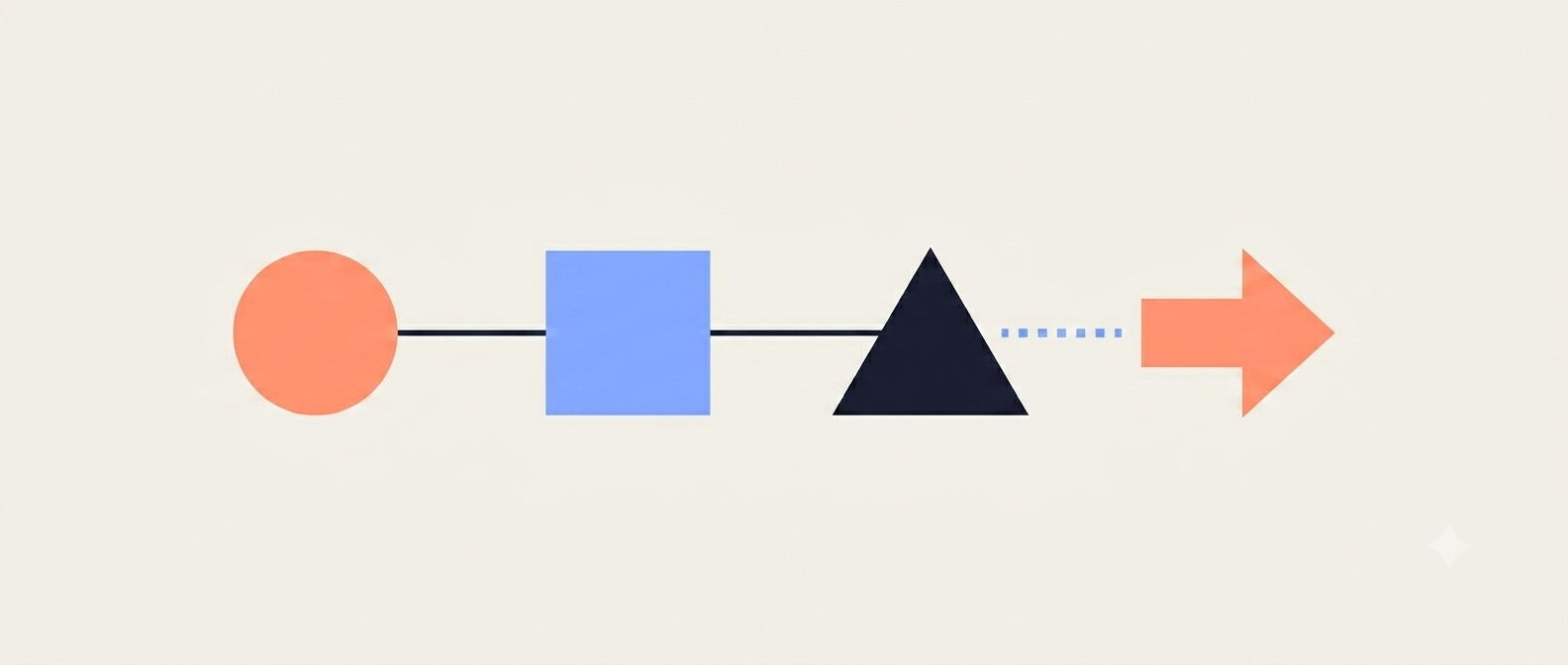
Organizations Are Redesigning Around Agents
AI is moving past giving better answers and turning into something that finishes the job. Coordinated agent setups now have one layer planning a goal into stages, and another layer executing each stage.
Companies are flattening their hierarchies in response. Roles that coordinate other roles are being absorbed into the agent layer, while individual contributors are picking up more of the judgment work that used to live one level up.
What that looks like for you, day to day, is less structure carrying you through the week. You have to provide your own.
Why You Need a Better Operating System for Work
AI compresses execution and changes which part of the work is hardest. Now, the hard part is everything that has to happen before execution.
This is what Asaura was built for. It’s a structured AI system that gives high performers a way to begin, focus, and finish work inside the new operating model.
If work used to feel like riding a bike on a flat road, AI just turned that road into a moving sidewalk that changes direction every ten minutes. Most people need a different kind of map to ride it well.
How to Start Adapting Today
Three steps for this week:
First, find your handoffs. List every point where work passes between you, a teammate, or an AI tool. Each one is where friction compounds.
Second, look for chains. Where could three tasks become one flow instead of three separate efforts with reviews in between?
Third, protect your initiation energy. AI handles the doing part well. The ignition stays yours to build.
Work is being redesigned around agents, with or without your input. Staying in motion inside that redesign is becoming the skill that separates people who do great work from people who feel buried by it.
🔒 This week’s paid article: Using Agentic AI to Manage the Cognitive Tax of Being a Decision-Maker at Work. If today’s article showed you how work is being rewired around agents, the upcoming paid article shows you how to actually use agentic AI to carry the weight of decision-making so you can think clearly under load.
I like the framing of chain based work here. I have found workflows to be the most helpful over just individual tasks and that's where the real value is being accured!
These have been my observations too from working with AI day to day, a lot more mental load moves into steering, reviewing, maintaining context, giving feedback, constantly making judgment calls, holding all things together inside my braind, context switching etc. That's super tiring, maybe even more tiring than executios sometimes :))
This felt very aligned with what the article is describing. Great read!