

I watched the Claude w/ Code event in San Francisco yesterday. This is what it revealed about the next chapter of work.
Anthropic’s developer conference showed how persistent, proactive AI will reshape daily productivity for everyone, not just programmers.

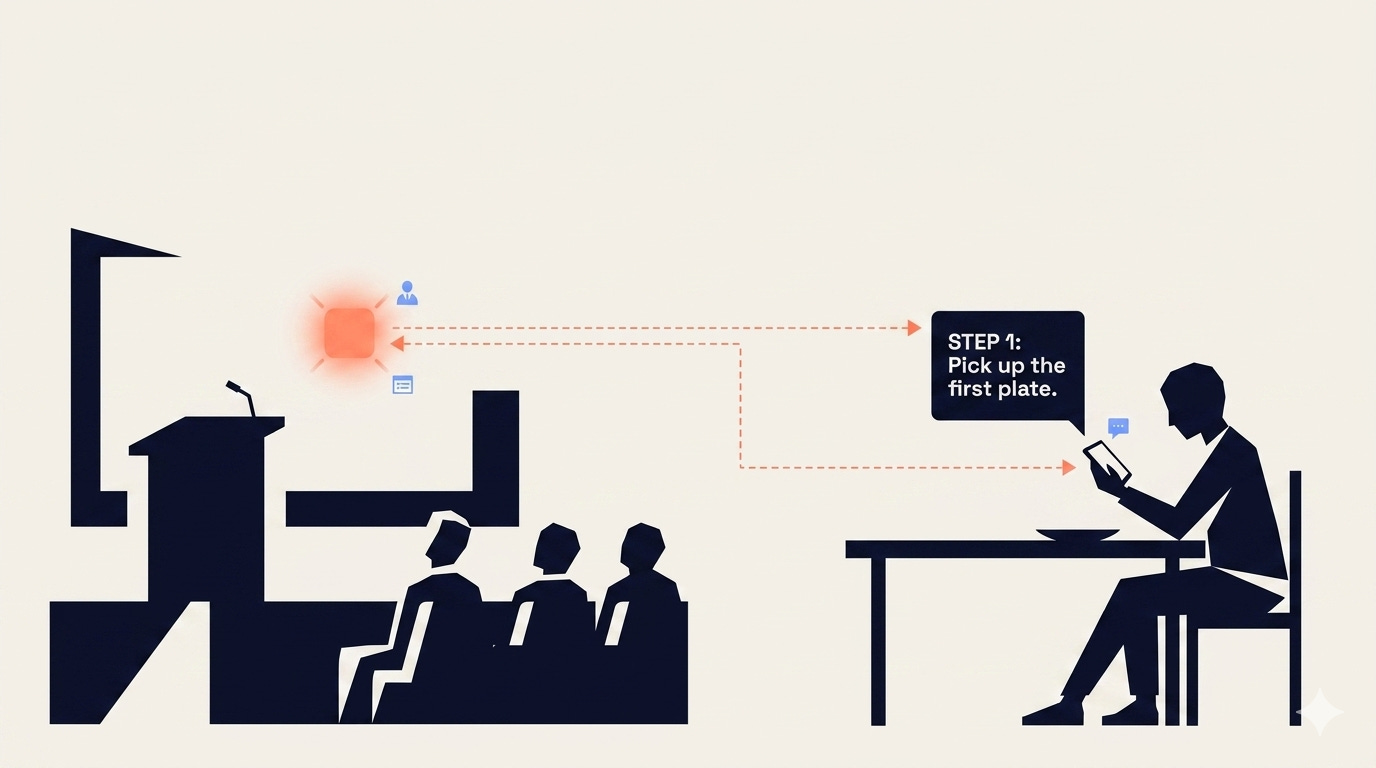
Anthropic Chief Product Officer, Ami Vora, opened the Code w/ Claude event with an anecdote of the first time a program she wrote actually worked: ‘that feeling of joy, discovery, a little relief.’ Then she said that same feeling now belongs to anyone, anywhere, any day of the week.
What was presented as a product showcase for developers was a blueprint for a working world where a persistent, proactive layer of intelligence handles the cognitive work that locks people out: planning, remembering, sequencing, and getting started.
Intelligence That Doesn’t Wait for You
You can break yesterday’s announcements down into three parts, each pointing toward the same outcome.
First, the models keep improving on an exponential curve. Task horizons now stretch from minutes to days. The latest model, Opus 4.7, catches its own planning faults, backtracks, and corrects itself without human intervention. This is an agent that works while you sleep.
Second, the platform now supports multi-agent orchestration, where a coordinator agent spins up specialist sub-agents, each with its own context window, to tackle complex jobs. They demonstrated Outcomes, a feature that lets you define success criteria and have Claude iterate until it meets them. Dreaming allows the system to review past sessions, write lessons into memory, and improve without a single new prompt. Define the goal, and the agents handle decomposition, execution, self-evaluation, and learning on their own.
Third, Boris Cherney, head of Claude Code, demonstrated Auto Memory. The feature lets Claude remember build commands, debugging insights, and project preferences across sessions, storing what it learns in a memory directory it manages itself. Routines let you set a trigger (a schedule, a webhook, or an API call), and Claude starts a new session without you needing to. Cherney described this as, ‘the default isn’t I’m going to prompt quadcode. The default is now I will have Claude prompt Claude.’ The system initiates its own work.
These updates turn AI from a passive tool you drive into an active, remembering, self-starting system that carries the cognitive load you can’t.
What This Means for the Future of Work
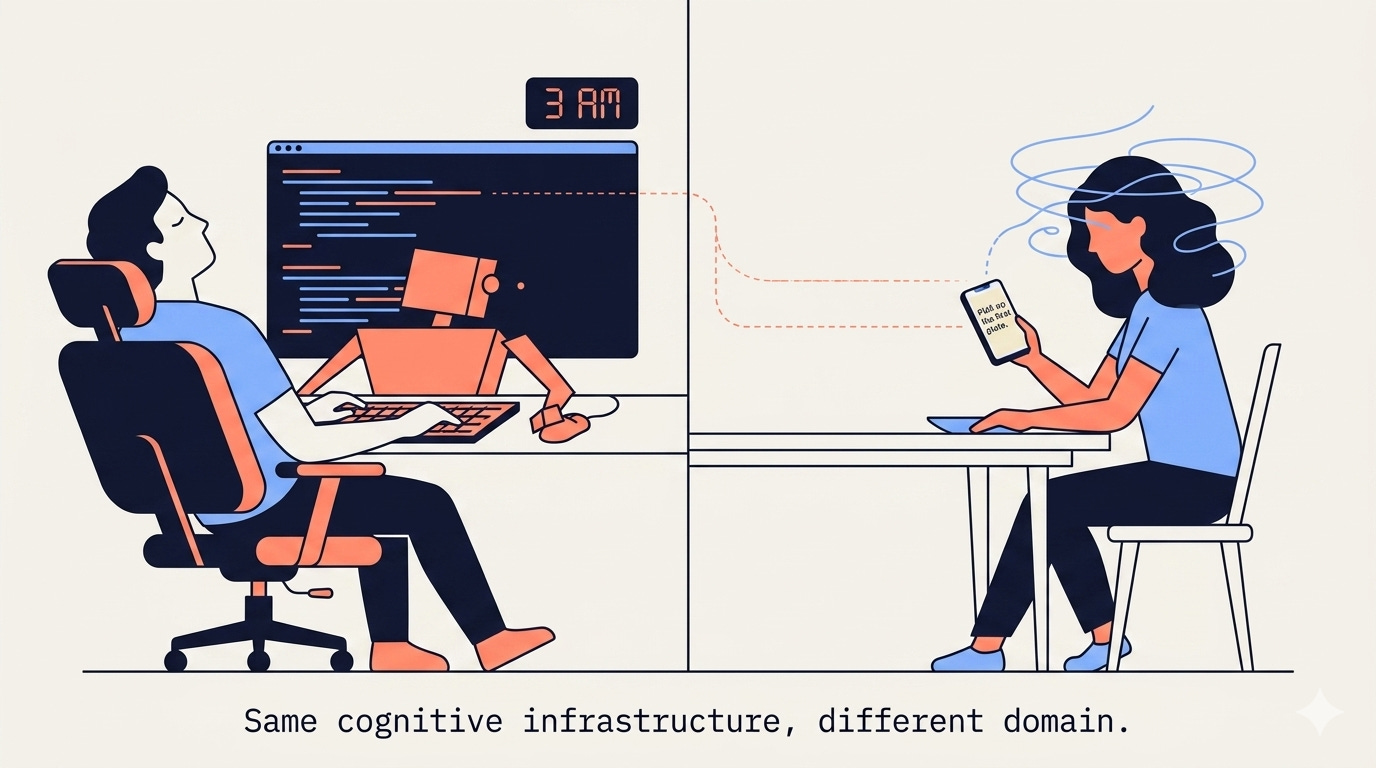
For decades, productivity tools have been passive. To-do lists sit passively, waiting for you to open them. Calendars store events, but don’t arrange them in the order you need to act. Both rely on you to keep track of everything. These tools assume you have working memory, task initiation, and planning circuits operating at full capacity. When they don’t, because of ADHD, fatigue, stress, or burnout, the tools offer nothing. They just sit there.
AI is becoming an active, persistent partner. It surfaces the next step at the right moment. It remembers patterns across days. It learns from your habits and improves without you asking.
This is the infrastructure people with executive dysfunction have been missing. A 2025 study on adaptive AI found a strong negative correlation (r = -0.457, p < 0.001) between cognitive load and sustained attention. Tools add cognitive load because you have to keep track of the full plan in your head. Active AI systems take on that load. They handle the remembering and planning so your brain doesn’t have to.
During the event, one of the speakers shared a concrete example. Binti, a foster care platform, used AI to automate paperwork for caseworkers and cut the foster family licensing process by 20 days. As the presenter put it, ‘That’s a kid connecting with a family.’
The same approach (cutting down the steps between intention and outcome) applies to daily life. When your brain can’t maintain a multi-step plan, you need a system that breaks tasks into tiny pieces and feeds them to you one at a time, at the right moment.
Claude’s Routines and Auto Memory handle this for code. Asaura AI handles it for life.
Asaura as One Shape of the Future
Asaura applies the same principles of persistent memory, context-aware surfacing, and automated sequencing to the tasks that stall everyday people. You type a stuck goal like ‘clean my kitchen’ or ‘find a therapist,’ and the system returns a concrete first micro-step. It gives you the concrete next step that your brain couldn’t produce when you felt stuck.
Asaura will run on the same infrastructure but add what Claude alone doesn’t offer: a specialized experience for life tasks. When you give Asaura a goal like ‘find a therapist,’ it will use Anthropic’s multi-agent orchestration to check your insurance portal, surface new openings, track who you’ve contacted, and pre-fill forms. Claude gives you the finished sequence, without you needing to manage the steps.
The industrial work model assumed a human with infinite executive function: show up, remember everything, sequence without error, and never fail to start. Software served that imaginary worker. The worker who is distracted, neurodivergent, or exhausted was left to feel broken when their brain couldn’t meet the tool’s demands.
In the AI era, the system carries the executive function. You bring the creativity, the judgment, the human connection. One speaker noted that ‘model upgrades are a business opportunity.’ The teams that win make it cheap to swap in a smarter model. The same principle applies to daily work. When starting, persisting, and sequencing a complex goal feels cognitively cheap, millions of people who’ve been stuck at the starting line can finally move forward.
Try It for Yourself
Vohra’s opening memory of the computer lab was about democratizing the joy of creating something. That joy should belong to anyone who has ever stared at a task and felt their brain go blank.
The infrastructure for this new working world is no longer a whiteboard sketch. It ships. It runs. If you want to experience what this feels like, open app.asauraai.com and type a task you’ve been avoiding. The system will give you a single concrete micro-step. That small action is a doorway to a future in which the cognitive prerequisites that kept you frozen become a shared burden with systems that never tire and never forget.